Pawnee Bill Ranch and Museum
Pawnee Bill Ranch and Museum
1141 Pawnee Bill Road
Pawnee, OK 74058
918-762-2513
pawneebill@history.ok.gov
Director: Ron Brown
Museum
Historical Interpreter: Samantha Griesel
Historical Interpreter: Seneca Poulton
Staff: Rosemary Brown
Ranch
Maintenance Supervisor: Kevin Webb
Staff: Jesse Allensworth
Hours
10 a.m. to 5 p.m.
Sunday
1 to 4 p.m.
Closed Monday, Tuesday, and all state holidays
| Adults | $7 |
| Seniors (62+) | $5 |
| Students (6–18) | $4 |
| Family (up to 6 people) | $18 |
| Group Rate (10+) | $5/person |
| OHS Members, Children (under 6), Veterans and Active Military (with ID) | Free |

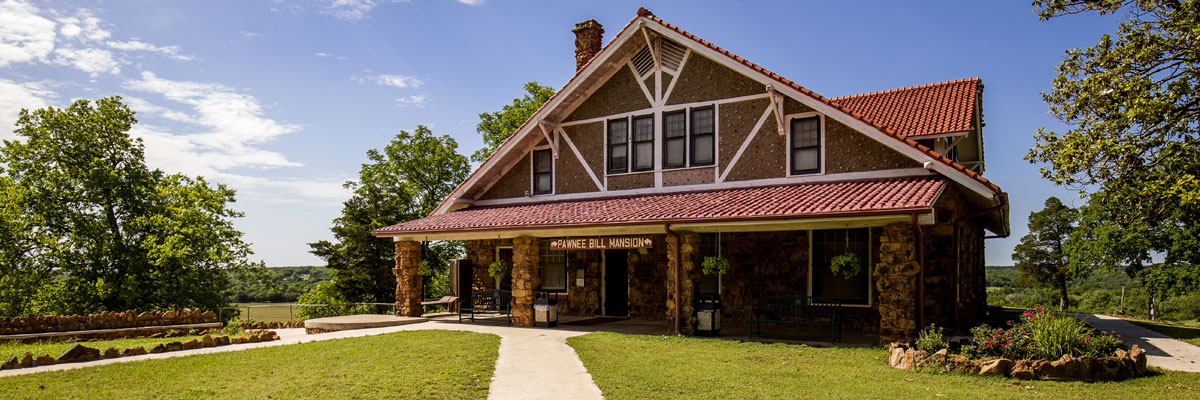
The Pawnee Bill Ranch was once the showplace of the world-renowned Wild West Show entertainer Gordon W. “Pawnee Bill” Lillie. Visitors can tour Pawnee Bill and his wife May’s fourteen-room mansion, fully furnished with their original belongings. Their dream home, completed in 1910, is filled with Lillie family memorabilia, photographs, original artwork, and more. The ranch property also houses a museum with exhibits related to Pawnee Bill, Wild West Shows, and the Pawnee Nation. The 500-acre grounds include the original ranch blacksmith shop, a 1903 log cabin, a large barn built in 1926, and an Indian Flower Shrine—all available to the public.
A herd of bison, longhorn, and several draft horses call the Pawnee Bill Ranch home and can often be found grazing in the drive-through exhibit pasture. The ranch is also a day-use facility and several outdoor amenities can be reserved for private functions. The ranch has covered picnic shelters, tipi-covered picnic tables, fishing ponds, a playground, and a meeting room. The Big Barn, shelter, meeting rooms, porches, and lawns can be rented for weddings, reunions, meetings, and more. The Pawnee Bill Ranch also proudly re-creates Pawnee Bill’s Original Wild West Show each year.

Research Requests
If you would like to submit a research request, please complete the request form. Fees to cover the cost of copies and postage may apply. Please return the completed form by email to Anna.Davis@history.ok.gov. Requests may also be directed to:
c/o Anna Davis, Pawnee Bill Ranch and Museum
PO Box 493
Pawnee, OK 74058
Research form (PDF) | Research form (MS Word)
Educational Resources
Our staff has created educational resources to enhance your visit. Use the links below to download the PDF documents. To learn more about our programs and tours, visit the programs page.
Teacher's Guide
Hungry Hungry Bison: Feeding the Bison at Pawnee Bill Ranch lesson plan
Just Horsin’ Around: Measuring the Clydesdale lesson plan
More than Lincoln: Life in a Log Cabin lesson plan
Scavenger Hunt
Locate Us
The Pawnee Bill Ranch and Museum is on Blue Hawk Peak, land which Pawnee Bill purchased from his Pawnee friend Blue Hawk. Blue Hawk Peak is located one-half mile west of Pawnee on US 64.


Friends of the Pawnee Bill Ranch Association
The Friends of the Pawnee Bill Ranch Association (PRBA) is a 501(c)3 organization dedicated to supporting the Pawnee Bill Ranch. The Ranch Association helps support the Wild West Show, ranch maintenance, collections acquisition and care, and much more.
We are in search of new members! If you are interested in the ranch or the Old West, print and complete the forms below and send it to us along with the membership fee. Thank you for your support and help! With your membership, you will receive a copy of the PBRA newsletter plus a 15 percent discount in the museum store.
Membership form (PDF) | Membership form (MS Word)
Explore More
View the Pawnee Bill Ranch and Museum Collection
“Home on the Range,” Crossroads
“Pawnee Bill (Gordon William Lillie)” in The Encyclopedia of Oklahoma History and Culture
Listen to past episodes of the Pawnee Bill Ranch and Museum Podcast
Oklahoma Historical Society
800 Nazih Zuhdi Drive, Oklahoma City, OK 73105 | 405-521-2491
Site Index | Contact Us | Privacy | Press Room | Website Inquiries
Get Updates in Your Inbox
Keep up to date with our weekly newsletter delivered straight to your inbox.
Subscribe Now